
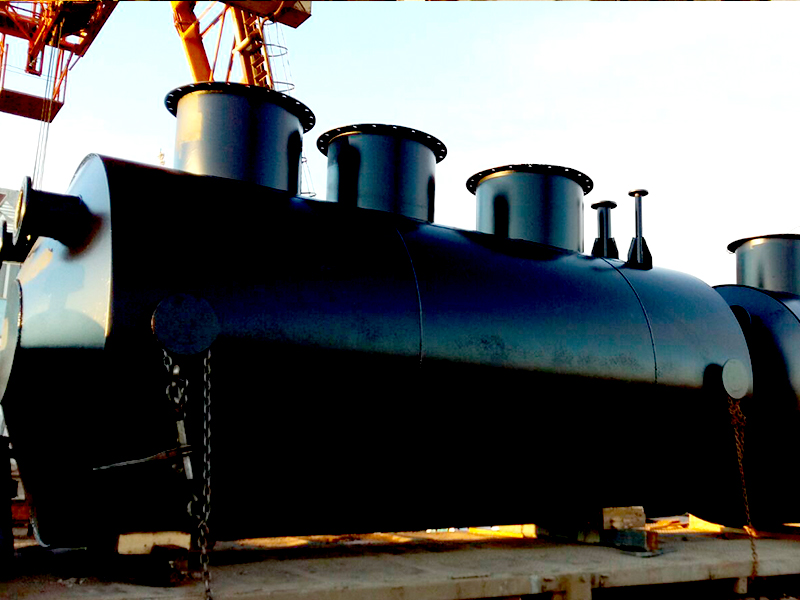
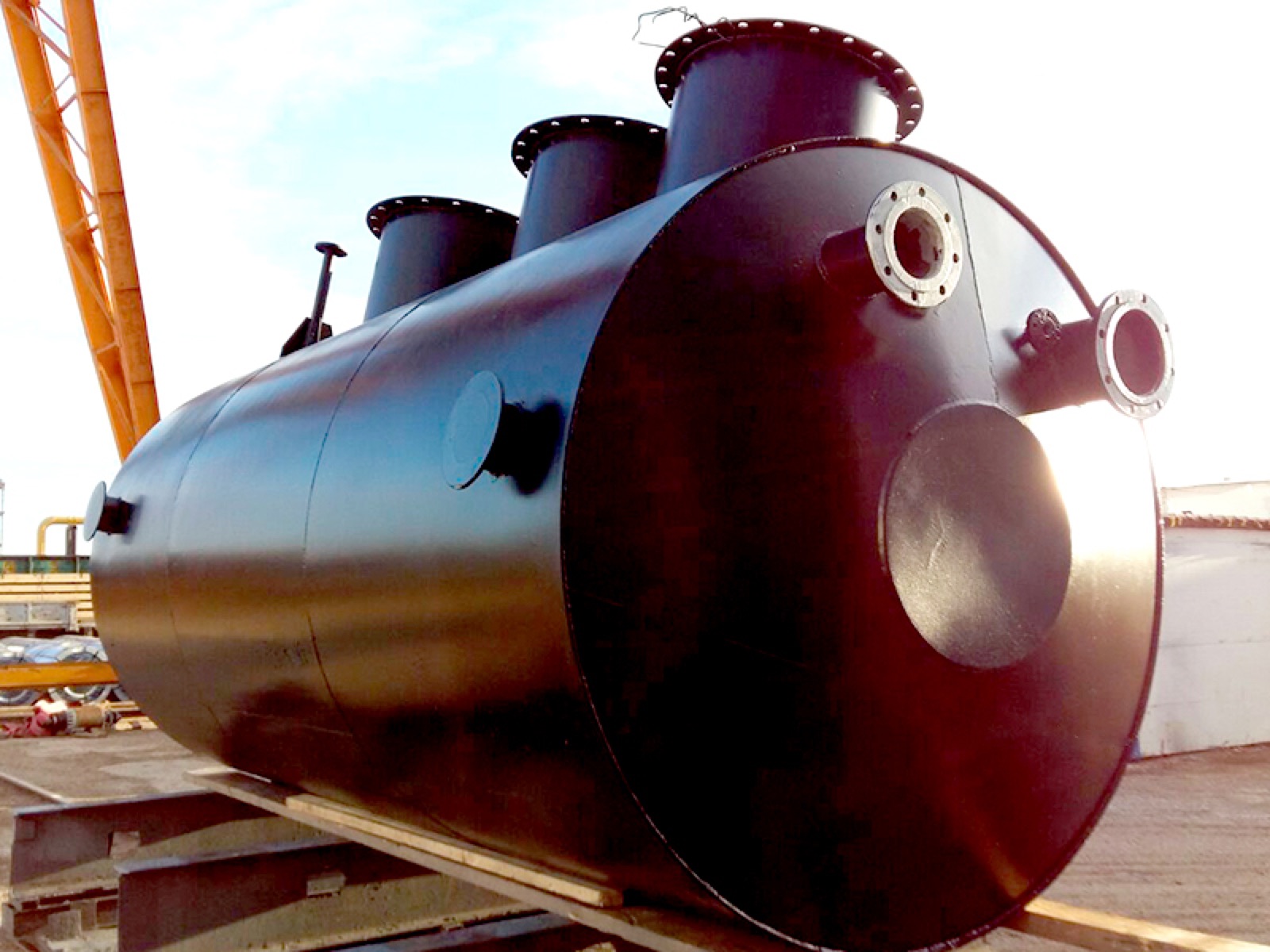
Aboveground and underground tanks, horizontal and vertical, designed to store oil and petroleum products, drinking and process water, acids, and other industrial liquids, as well as hoppers, reactors, and mixing tanks with volumes from 3 to 200 m³. They are welded steel reservoirs of cylindrical or rectangular cross-section, equipped with hatches, manholes, drain and shut-off valves, heating systems, service platforms, and other equipment according to the technical specifications. The tanks are designed to store liquids at atmospheric pressure.
Silos (silo towers) with a capacity of up to 500 m³, designed for storing, loading, and feeding dry bulk products and materials into a process, are welded cylindrical steel reservoirs with a conical bottom, either self-supporting or frame-mounted, supplied fully factory-assembled or erected on site using sheet-by-sheet assembly. The silo design prevents moisture from entering the silo. A silo is an integral part of concrete batching, loading, and dosing plants and, according to the technical specifications, is fitted with lids, hatches, slide gates, a top platform, top platform railings, and a ladder.
Silos
A silo is a storage structure for bulk materials such as cement, sand, grain, compound feed, pellets, etc.
It should not be confused with silage — succulent fodder for farm animals.
A silo is a cylindrical vessel with a conical bottom.
Thanks to its vertical design, a silo saves considerable floor space despite the large volumes of material it stores. Another equally important advantage of a silo over a conventional warehouse is better protection of the stored material against external environmental factors (dampness, rain, snow).